In the local SEO ecosystem of 2026, creating a high-performing website is no longer enough to dominate search results in your geographical area. Google's algorithm heavily relies on external signals to validate the existence, legitimacy, and popularity of a local business. Among these signals, local citations hold a prominent place. A local citation refers to any online mention of your business's name, address, and phone number (the famous NAP triad), often accompanied by a link to your website, as explained by BrightLocal.
However, the directory landscape has evolved considerably. Gone are the days when simply listing yourself on hundreds of obscure directories was enough to trick search engines. Today, quality far outweighs quantity. Listing on an outdated directory or a «link farm» can even permanently harm your visibility. This article decrypts the truly essential French directories in 2026 and the methodology for building an infallible local citation strategy.
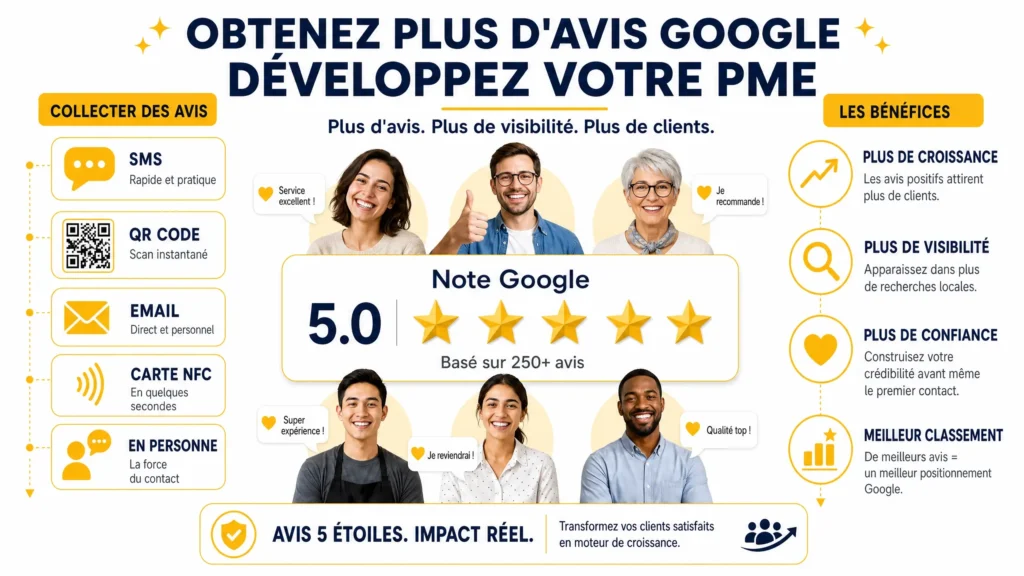
Why are local citations a major ranking factor?
To understand the importance of local citations, you need to put yourself in Google's shoes. When a user types «plumber Paris 15» or «organic restaurant Lyon,» Google must decide in milliseconds which businesses deserve to appear in the Local Pack (the three map results at the top of the page). To make this decision, it relies on three pillars: relevance (does your business match the query?), proximity (are you geographically close?), and prominence (are you recognized and cited by reliable sources?).
Local citations directly contribute to this third pillar. Every time your business is listed with its exact contact information on a high-quality directory, Google receives an additional signal confirming your existence and legitimacy. France is the third-largest e-commerce market in Europe, and with 82% of French men and 86% of French women shopping online, local visibility has become a critical business issue for all small and medium-sized businesses.
In 2026, local citations will also play an increasing role in visibility within generative AI search engines like ChatGPT, Perplexity, and Google AI Overviews. These systems rely on structured data and consistent sources to recommend local businesses. A strong presence on reference directories significantly increases your chances of being cited in these new discovery channels.

The crucial importance of NAP consistency in 2026
Even before listing directories, it's fundamental to understand the concept of NAP (Name, Address, Phone) consistency. For Google, each local citation acts as a vote of confidence. If Google finds your business mentioned on Pages Jaunes, TripAdvisor, and Facebook with the exact same contact information, its confidence level increases, which will propel your Google Business Profile up in the Local Pack.
Conversely, if your address differs slightly from one directory to another (e.g., «Avenue» vs. «Av.» or an outdated, non-updated phone number), the algorithm perceives an inconsistency. This confusion immediately degrades your local trust score. That's why the first step in any citation strategy is to audit what exists and meticulously standardize your contact information before any new registration.
NAP standardization involves choosing a single format and adhering to it strictly: one format for the phone number (e.g., 01 23 45 67 89 or +33 1 23 45 67 89, but never both), one spelling for the company name (with or without the legal status), and a complete and identical address everywhere. At Flowr Agency, we systematically start with this NAP audit before taking any action on directories.
Read also:

Social Proof: The Complete Guide to Boosting Your Conversions.
General «Tier 1» directories: the top priority
Certains annuaires possèdent une autorité historique telle que Google les indexe systématiquement et s’en sert comme base de données de référence pour valider les informations des entreprises françaises. Ces plateformes constituent le socle indispensable de votre présence locale.
| Directory | Local SEO Impact | Affected sectors | Observation 2026 |
|---|---|---|---|
| Google Business Profile | Critique | All sectors | The cornerstone of local SEO. Essential for appearing in the Local Pack and Google Maps. |
| Yellow Pages | Very strong | All sectors | Considerable historical authority in France. Systematic indexing by Google for local queries (Source: PropelLead). |
| Mappy | Fort | All sectors | Major influence for mobile queries and the map dimension. |
| Apple Business Connect | Fort | All sectors | Essential for reaching iOS users via Apple Maps and Siri. |
| Bing Maps | Average | All sectors | Often overlooked, but it captures a significant portion of local searches via Windows and Edge. |
| Waze | Average | Commerce, restaurants, services | Widely used for navigation, especially for local businesses. |
Listing on these platforms is not optional. These six directories alone generate more than 80% of the algorithmic trust required to appear in the Local Pack. Their setup must be flawless: high-quality photos, descriptions optimized with your local keywords, up-to-date hours, and precise business categories.
Continue reading:
Google Profile (formerly Google My Business): The free tool to be on the first page of Google.
Industry directories: the lever of specialization
Once the general foundation is established, true differentiation occurs through specialized directories. Google understands the semantics of these platforms and gives disproportionate weight to a listing from a hyper-specialized directory in your field of activity. A single listing on TripAdvisor for a restaurant is algorithmically worth more than ten entries on low-quality general directories.
The French landscape is very structured by sector. For restaurants and hotels, platforms like TripAdvisor, TheFork, or Booking.com capture most searches and convey significant thematic authority. In the medical field, an optimized presence on Doctolib has become an essential standard. Legal professions rely on directories like Avocat.fr, while construction trades benefit from platforms like Houzz or Travaux.com.
For B2B companies and professional service providers, LinkedIn is a leading industry directory. A complete and regularly updated LinkedIn company page sends a strong signal of authority to Google, while also directly generating qualified leads. This is, in fact, one of the levers we systematically activate in our LinkedIn community management offer at Flowr Agency.
The challenge isn't to be everywhere, but to be present where your prospects are looking for experts in your industry. A well-targeted industry citation strategy can radically transform your local visibility within weeks.
Tier 2 Directories: Useful Additions
Beyond the must-haves, a second tier of directories deserves your attention. These platforms aren't critical, but they help to strengthen your citation network and reinforce the consistency of your local presence in Google's eyes.
Among the most relevant «Tier 2» directories in France are Foursquare, which despite its decline in mainstream use still powers several third-party services and mobile applications that can indirectly impact your SEO. OpenStreetMap is also valuable because its data is used by many mapping applications and services. Trustpilot, while primarily focused on consumer reviews, is a quality citation for e-commerce businesses and service providers.
Yelp deserves special mention: its influence varies considerably depending on geographical areas and sectors. In large French cities, particularly Paris, Lyon, and Marseille, Yelp is still consulted for restaurants and local businesses. However, in medium-sized towns, its impact is much more limited.

Traps to avoid: toxic directories
One of the most common errors observed during our SEO audits is the massive, automated submission to low-quality directories. In 2026, Google actively penalizes businesses associated with «link farms.» It is imperative to scrupulously avoid three categories of directories.
First, avoid directories that group thousands of listings without any human moderation or curation. These sites are identified as spam by Google, and the penalty can be transferred to the sites that register on them. Second, beware of excessively expensive paid directories that promise SEO miracles. If they don't have real user traffic, their algorithmic value is almost nil and their cost is unjustified. Finally, avoid outdated directories whose interfaces haven't evolved in ten years. These sites often host outdated information that will pollute your overall NAP consistency.
A simple warning sign: If a directory offers free registration in under 30 seconds with no verification, no CAPTCHA, and no confirmation email, it's highly likely a link farm. The quality of a directory is recognized by the rigor of its registration process and the presence of real organic traffic.
The deployment strategy: where to start?
Faced with the multitude of directories available, the question of deployment naturally arises. The recommended methodology is structured in three successive phases. The first phase consists of auditing your existing presence using tools like BrightLocal or Whitespark to identify all existing citations and detect NAP inconsistencies. This step generally takes two to three hours but is absolutely essential.
The second phase is correction and standardization. Before adding new citations, you must correct all identified inconsistencies. Claim existing listings on each directory and update your contact information with the standardized NAP format you have defined. The third phase is gradual deployment: start with «Tier 1» directories, then add the most relevant industry-specific directories for your business, and finally complete with «Tier 2» directories according to your availability.
It is better to have ten perfectly filled out and consistent listings than fifty rushed or incomplete ones. The quality of the information (photos, description, hours, categories) is as important as NAP consistency in maximizing the SEO impact of each citation.
Frequently asked questions (FAQ)
What is a local citation in SEO?
A local citation is an online mention of your business's contact information, including at least the name, address, and phone number (NAP). It is typically found on business directories, social media networks, or review sites, and serves as a trust signal for Google's algorithm to validate your local existence and legitimacy.
Why are Pages Jaunes still important in 2026?
Despite Google's dominance, Pages Jaunes retains exceptional historical domain authority in France. Google systematically crawls and indexes its pages to verify the legal existence and contact information of French businesses, making this directory an essential pillar of local SEO, regardless of the direct traffic it generates.
Do you have to pay to register on local directories?
In the vast majority of cases, no. Free listings on major directories (Google Business Profile, Yellow Pages, Apple Maps, TripAdvisor) are sufficient for SEO. Paid subscriptions are only justified if the directory directly generates qualified leads for your specific industry, such as Doctolib for medical professionals.
What to do if my contact details are incorrect in an old directory?
NAP inconsistencies are hurting your SEO. You must claim your listing on this directory to correct the information. If the platform is abandoned and it's impossible to modify the listing, it's best to contact the’host or use Google's Disavow tool if a toxic link points to your site.
Do social media count as local citations?
Absolutely. A well-filled-out business Facebook page, LinkedIn profile, or professional Instagram account with your address and phone number constitutes excellent local citations. Google uses these highly authoritative social profiles to validate your brand's identity and strengthen your local trust score.





 Français
  English