You want to generate more qualified leads, and you're hesitating between a white paper and a e-book like lead magnet. This is a common and legitimate question. Both formats attract prospects, but they do not serve the same objectives or audiences. Choosing the right format means maximizing your lead generation without wasting time or budget.
The white paper is often seen as an expert, serious, and technical document. It speaks to decision-makers. It builds authority. The’e-book, he is more accessible, practical, and user-oriented. It aims for volume and quick engagement. Both are forms of lead magnet content, but their strategic use differs depending on your target, your offering, and your market positioning.
In this guide, we will ask the right questions to help you decide. We will compare length, tone, audience, expected conversion, and costs. We will also look at when to create both and how to articulate them in a high-performing conversion funnel. Finally, you will find concrete examples and a practical methodology for choosing and producing a lead magnet that truly works for your business.
Ready? Let's start by clearly defining what an e-book is, and then a white paper, so you can make an informed decision.
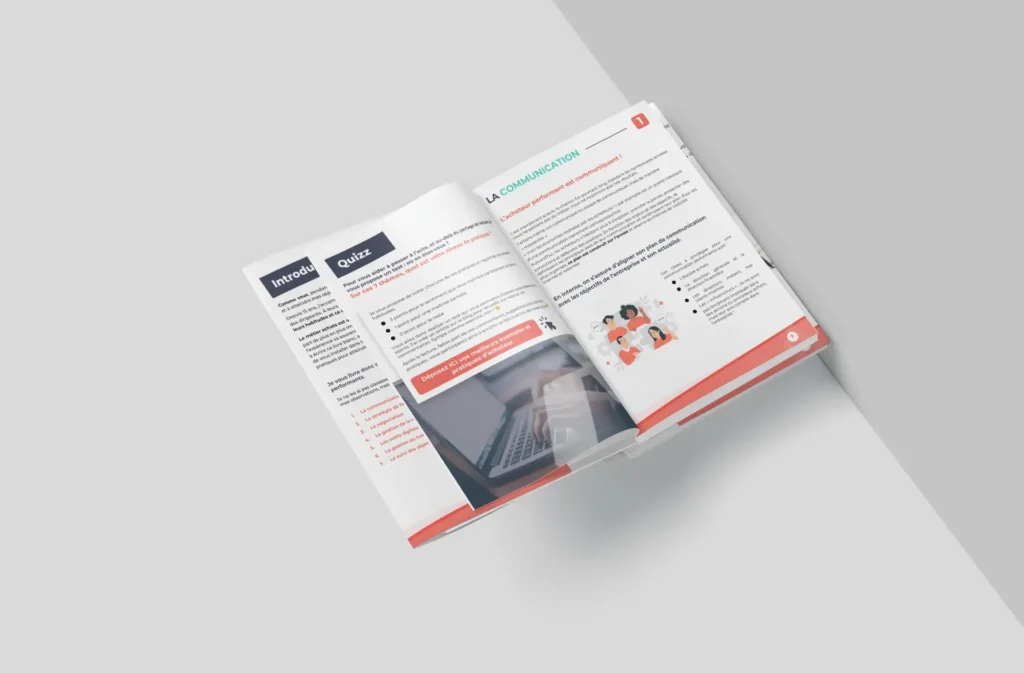
What is an ebook?
A e-book is a digital guide designed to be read and used quickly. Unlike a white paper, it prioritizes the practical aspect: recipes, checklists, steps to follow, concrete examples. Its main objective is to provide immediately usable value for the reader; people come to it to learn something they can apply right away.
The ebook is often used at the top or middle of the funnel (TOFU / MOFU): it attracts a large audience, nurtures the relationship, and allows for lead qualification before engaging them further. It lends itself very well to educational content, step-by-step tutorials, and simplified case studies.
Features:
-
PDF or HTML
-
Length: 20–50 pages
-
Tone: informative and practical, accessible
-
Objective: Educate, generate traffic, and convert into qualified leads
-
Frequent structure: introduction, 4–8 short chapters, «key takeaways» boxes, subtle calls to action
-
Marketing uses: lead magnets, downloads in exchange for email addresses, basis for nurturing email series
Practical Tip: To maximize effectiveness, structure the ebook into clear chapters with visuals (diagrams, screenshots, checklists) and end each chapter with a micro-action (tool to test, question to ask yourself, small exercise). Include a clear CTA (Call to Action) for a consultation or a complementary resource without disrupting the reading experience.
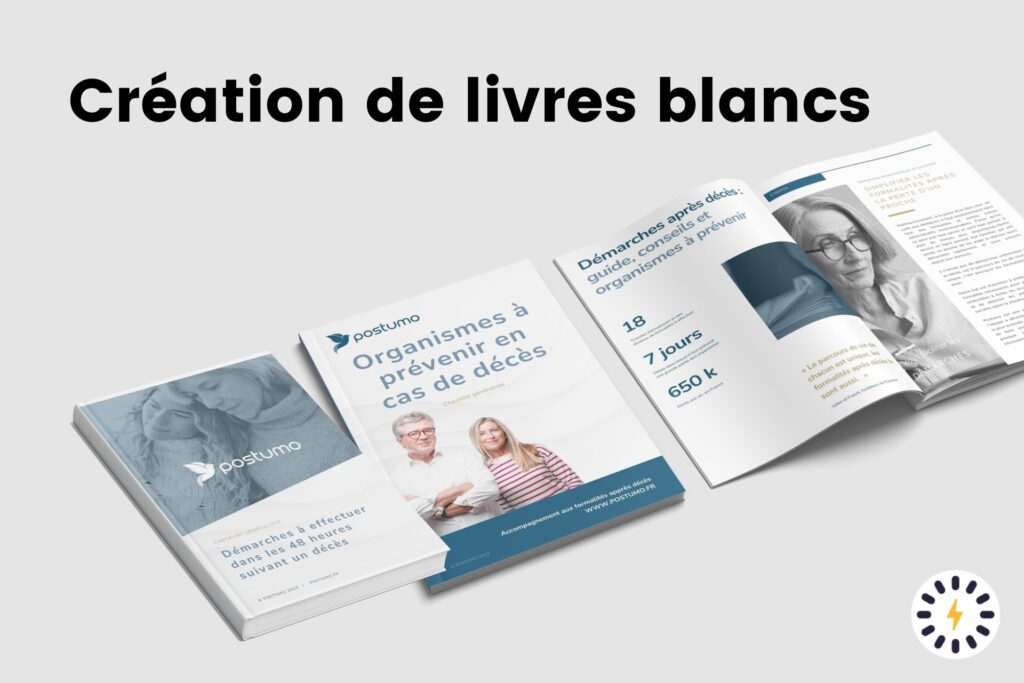
What is a white paper?
A white paper is an analytical and in-depth document that examines a specific subject from the perspective of research, data, and operational recommendations. Where an ebook focuses on practicality and quick implementation, a white paper is aimed at decision-makers: it demonstrates expertise, synthesizes evidence (studies, figures, feedback), and delivers structured reasoning that helps in making strategic decisions. Reading it should leave the reader better informed and confident in the credibility of the issuer.
The white paper is often placed in the middle or bottom of the funnel (MOFU / BOFU): it is used to convert visitors into qualified leads or to nurture a business relationship with professional contacts. To be convincing, it requires a rigorous approach: defining a clear problem, collecting and verifying data, building an argument, and a conclusion with actionable recommendations. It is a thought leadership tool that enhances brand value and facilitates quality commercial contacts.
Features:
-
Format: PDF
-
Length: 10–20 pages (often dense and focused)
-
Tone: analytical, professional, referenced
-
Objective: establish authority, convince decision-makers, generate qualified leads
-
Executive summary, context and problem statement, methodology, analyses/figures, case studies, recommendations, conclusion and call to action
Marketing use:
- Premium content to gatekeeper (download for qualified lead)
- Commercial prospecting support (sending to targeted contacts)
- Content for B2B webinars and presentations (expertise base)
- Public relations and sector credibility resources
Practical tips for an effective white paper:
- Back it up with verifiable data (sources, clear methodology).
- Include at least one concrete case study or customer testimonial.
- Executive Summary: The decision-maker must understand the value in 2-3 sentences.
- Provide useful visuals: charts, tables, summary diagrams (no unnecessary ornamentation).
- Conclude with clear recommendations and a call to action (contact, demo, consultation).
- Have it reviewed by a subject matter expert to validate the substance and by a proofreader for form.
This section of the guide should allow the reader to immediately distinguish when to prefer a white paper over an ebook: when the objective is to convince a professional audience, demonstrate technical expertise, and generate high-value leads.
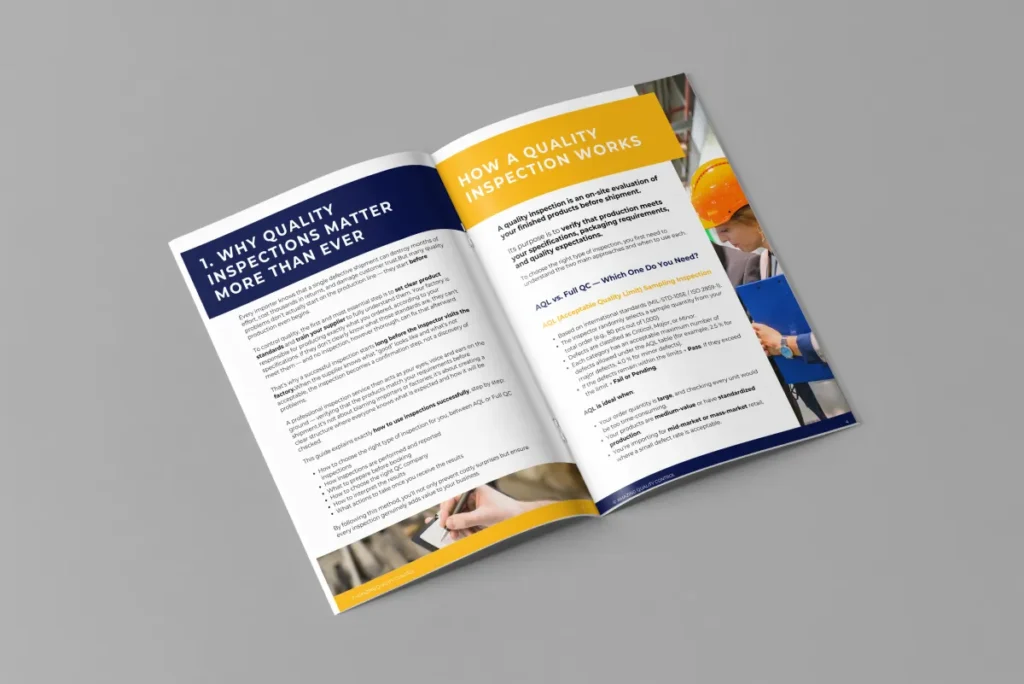
White Paper vs. Ebook Comparison
Length
An ebook is typically 20 to 50 pages long. It leaves room for practical examples, visuals, and step-by-step instructions.
The white paper is shorter (10–20 pages) but denser: each page often contains more arguments, data, and references.
An ebook serves to guide the reader step by step. It allows for a more pedagogical tone and practical inserts.
The white paper aims for argumentative effectiveness: it gets straight to the point, synthesizes evidence, and facilitates a professional decision.
Tone
The ebook adopts a practical and accessible tone. It explains, illustrates, and helps to immediately apply solutions.
The style remains friendly: clear sentences, concrete examples, actionable steps.
The white paper has a professional and analytical tone. It relies on data, methodology, and measured conclusions.
He seeks to convince decision-making stakeholders by demonstrating rigor and mastery of the subject.
Audience
The ebook targets a broad audience: curious prospects, end-users, individuals, and small teams.
It’s an ideal format for driving traffic, building loyalty, and educating a large audience.
The white paper is aimed at decision-makers and professionals (MOFU/BOFU). It is intended for those who are evaluating a solution or strategy for their organization.
It works well for targeted prospecting, B2B nurturing, or as sales support for qualified appointments.
Objective
The ebook aims to educate and generate qualified leads in volume. It creates visibility and drives subscriptions or downloads.
It helps build trust through utility: a guide is downloaded that offers immediate solutions.
The white paper aims to establish authority and generate qualified leads. It should facilitate decision-making or a business contact.
Its objective is often to feed a high-value pipeline rather than to solely increase the number of downloads.
Conversion rates
An ebook typically converts about 3–5 leads. It attracts a broad audience, a portion of which will become sales leads.
The effectiveness depends on the subject, promotion, and the quality of the call to action (form, demo, consultation).
A white paper typically achieves a conversion rate of 5–10%. Its perceived higher value attracts more qualified leads.
This rate increases when the document is promoted to a targeted audience (segmented emailing, LinkedIn Sales Navigator, industry partnerships).
When to choose an ebook?
An ebook is ideal when your main goal is to reach a large audience and attract a significant volume of leads. It's a flexible format, easy to produce and promote, allowing you to explain concepts, provide practical methods, and offer real immediate value to the reader.
- You are targeting a broad audience The ebook works well for various audiences (individuals, small teams, end-users). Its accessible tone facilitates sharing and distribution on social networks and in newsletters.
- You want to generate a lot of leads With its pedagogical format and its ability to solve a concrete problem, the ebook attracts a large number of downloads and quickly builds your contact list.
- Your product is B2C: For consumer-oriented offers, ebooks allow you to demonstrate product usefulness through practical guides, recipes, checklists, or tutorials that convert well.
- You have a limited budget: Compared to a white paper, an ebook often requires less research, can be produced and promoted at a lower cost, while still offering a good return on investment.
In summary, choose an ebook when you prioritize reach, immediate utility, and volume generation. If you are targeting decision-makers or highly qualified leads, opt for a white paper instead.

When to choose a white paper?
Choose a white paper when your goal is to reach decision-makers and contacts with strong purchasing power or influence. A white paper is essential for complex topics that require evidence, data, and structured arguments, such as case studies, benchmarks, methodologies, and market analyses. It speaks the language of managers (procurement departments, CIOs, marketing departments, etc.) and serves to demonstrate your company's expertise while building the trust needed for strategic purchasing decisions.
A white paper requires an investment of time and resources (research, interviews, professional design), but it generates more qualified and easier-to-convert leads in return. It works particularly well in B2B when you can offer it via a qualifying form, send it to targeted lists, or distribute it at professional events. To maximize its impact, include a «business implications» chapter and actionable recommendations that help the reader justify the decision internally.
Practical points to observe
- Target audience: decision-makers, buyers, project managers, consultants.
- content: data, verifiable sources, case studies, clear methodology.
- Format: Polished PDF, 10-20 pages, professional design, and numbered citations.
- distribution: gating (forms), targeted email deployment, LinkedIn broadcast, sales enablement assets.
- KPIs to track: conversion rate visits → download, lead quality (job title/company size), sales follow-up open rates.
Our recommendation: Both!
At Flowr Agency, we recommend creating both An ebook and a white paper. They serve different objectives and, when combined, play a complementary role in your lead generation strategy: one fuels volume, the other quality. Here's how to use them together operationally.
-
Ebook: generate volume
An ebook serves to attract a wide audience with practical and immediately useful content. Think of a «step-by-step» guide, templates, or tool lists: shareable, easy-to-consume content optimized for SEO. Use it as a primary lead magnet on your blog or social ad campaigns to capture top-of-funnel (TOFU) prospects. Distribute it widely (lightweight form, LinkedIn sharing, targeted landing pages) to multiply downloads and grow your database. -
White Paper: Generating Quality
The white paper targets decision-makers and strategic accounts. It must contain data, case studies, methodology, and actionable recommendations. Stricter gating (qualifying form, business questions) and controlled distribution (targeted emailing, account-based marketing campaigns, assets for sales teams). The objective: to generate substantially more qualified leads, ready for a commercial discussion. -
Diversify your lead magnets
Propose two formats for different touchpoints: the ebook for organic and social traffic, and the white paper for sales actions and B2B partnerships. Add variations (downloadable checklist, mini-webinar linked to the white paper, excerpt of the white paper as an article) to multiply conversions without producing a complete asset each time. Diversification reduces risk and increases your entry points into the customer journey. -
Test, measure, and iterateImplement simple A/B tests: forms (long vs. short), different landing pages, title variations, and acquisition channels. Measure not only volume (downloads) but especially quality: appointment booking rate, post-sales conversion rate, average lead value. Recommended cadence: publish the ebook first to quickly generate traffic, then launch the white paper 6-8 weeks later, capitalizing on insights gathered (frequently asked questions, top-performing topics).
Recommended practical process (example)
Week 1–4: Ebook writing and design + lightweight landing page.
Weeks 5-8: ebook promotion (SEO, organic LinkedIn, small paid campaigns).
Weeks 9-14: White paper production (research, interviews, client case study).
Week 15: White paper gating and targeted campaigns (ABM, prospecting list).
Continue: Weekly reporting + data-driven iterations.
Content repurposing best practices
- Transform the white paper into a webinar or series of articles to extend its life.
- Extract sections from the ebook to create shorter lead magnets (checklists, templates).
- Provide sales representatives with summary sheets and ready-to-use emails for follow-up.
KPIs to track
- Ebook: downloads, cost per lead, organic traffic generated.
- White Paper: Qualified Leads, Appointments Set, Sales Conversion Rate.
- Cross : Lead progression through the funnel (MQL → SQL → Customer) and LTV by channel.
By combining volume and quality, you create a more robust and measurable pipeline. If you'd like, we can outline a 3-month editorial calendar and conversion funnel tailored to your target audience and budget.
Let's create your perfect lead magnet together. Book a free consultation.




 Français
  English